
How Many PRP Sessions for Hair Loss Are Needed? | Dermiq Clinic
Hair loss rarely happens in a day, so it makes sense that treating it may take time, too. One of the first questions people have before starting PRP treatment for hair loss is simple: how many sessions will they actually need?
There is no single number that works for everyone. Hair loss can be mild, moderate, or quite advanced, and the condition of the hair follicles also matters. That is why the number of PRP sessions needed for hair loss can vary from person to person.
Usually, PRP is planned as a series of sessions rather than a one-time treatment. The exact schedule depends on the person’s scalp and the doctor’s assessment.
PRP sessions for hair loss aim to support existing hair follicles gradually. PRP uses a person’s own blood, which is processed to separate platelet-rich plasma, then applied to selected areas of the scalp.
One session may begin the process, but hair growth itself takes time. Follicles need time to respond, and visible change does not happen immediately.
This is also why PRP for hair regrowth shouldn’t be treated like an instant hair restoration procedure. The aim is usually to support existing follicles and improve the overall condition of thinning hair over time.
So, How Many Sessions Are Usually Needed?
For many people, PRP sessions for hair loss are planned as a short initial course, often with around three sessions spaced several weeks apart. After that, maintenance sessions may be suggested depending on how the hair is responding.
But this should not be treated as a fixed rule.
Someone with early thinning may have a different treatment plan from someone who has been dealing with hair loss for several years. The cause of hair loss matters too. A doctor may first look at the pattern of hair loss, the density of existing hair, scalp condition, and whether the follicles are still active.
So, when asking how many PRP sessions are needed for hair loss, it is better to think in terms of an individual treatment plan rather than a number copied from someone else’s experience.
What Happens During The Sessions?
The actual PRP process is fairly straightforward. A small amount of blood is taken from the arm and placed in a centrifuge. This separates the blood components, allowing the collection of platelet-rich plasma.
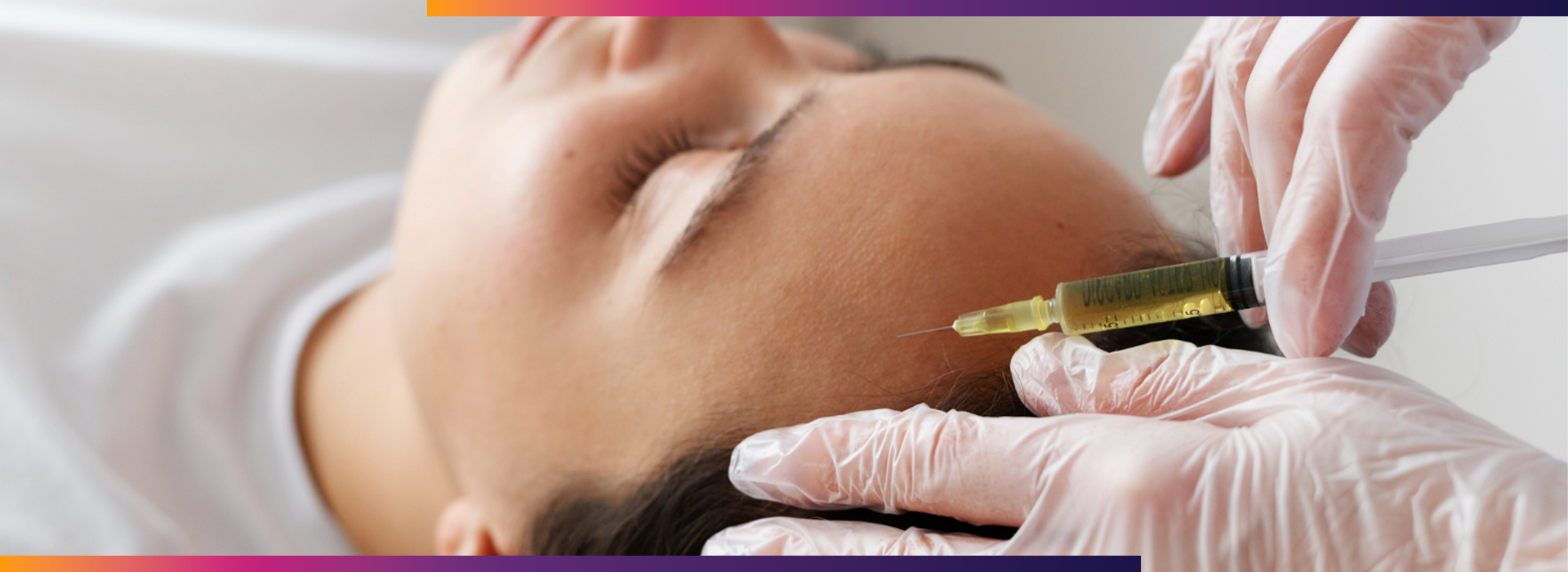
The prepared plasma is then injected into selected areas of the scalp.
A few things can make the experience slightly different for each person, including scalp sensitivity and the amount of hair thinning.
Before starting PRP sessions for hair loss, a proper consultation helps the doctor understand what is actually causing it.
When Can Hair Changes Be Noticed?
This is probably the part that needs the most patience.
Hair does not suddenly become thicker a few days after a PRP session. Some people may notice changes gradually over the following weeks or months, while others may need more time.
The response also depends on follicle health. If the follicles are still producing hair but have become weaker or thinner, PRP for hair regrowth may be considered as part of the treatment plan.
A person should also avoid judging the treatment after just one session. Progress is usually evaluated over the full course.
What Can Affect The Number Of Sessions?
Several factors can change the treatment schedule.
- The cause and pattern of hair loss
- How long the hair loss has been present
- The condition of the existing follicles
- The amount of thinning on the scalp
- How the scalp responds to treatment
- Whether maintenance treatment is needed later
This is why two people sitting in the same clinic may not necessarily receive the same number of PRP sessions for hair loss.
Is PRP Suitable For Everyone?
PRP is often considered for certain types of hair thinning, including androgenetic alopecia. But that doesn’t mean it is automatically suitable for everyone experiencing hair loss.
Sometimes hair loss is connected with nutritional issues, hormonal changes, medical conditions, stress, or other causes that need attention first.
A consultation can help separate these possibilities. If the follicles are severely damaged or hair loss is advanced, a doctor may discuss other options instead of relying only on PRP treatment.
How We At Dermiq Approach PRP
At Dermiq, we understand that hair loss looks different from person to person, so we don’t treat PRP sessions for hair loss as a fixed routine for everyone. We first assess your hair loss and then discuss which treatment may be suitable. We offer platelet-rich plasma treatment in Hyderabad and also provide GFC PRP Therapy, a more concentrated form of PRP designed to deliver growth factors to the scalp.
At Dermiq, experienced professionals carry out the treatment to support natural-looking hair growth. For people with more advanced hair loss who may not be suitable for PRP, we may also discuss other hair restoration options, including hair transplantation.
What About GFC PRP Therapy?
Some people may come across GFC PRP Therapy while researching PRP for hair loss. GFC stands for Growth Factor Concentrate and refers to a more concentrated approach to using growth factors from the patient’s blood.
At Dermiq, GFC PRP Therapy is available for people seeking this more advanced form of platelet-based hair treatment. Whether standard PRP or GFC PRP is more suitable depends on the individual’s hair loss and the doctor’s assessment.
What To Expect After Treatment
The scalp may feel a little tender after the injections. Mild redness, swelling, itching, or discomfort can also happen for a short time.
It is generally sensible to follow the aftercare instructions given by the treating doctor rather than trying random products immediately after treatment.
The same goes for expectations. PRP for hair regrowth doesn’t guarantee the same result for everyone. The response depends on the underlying condition and the health of the hair follicles.
Final Thoughts
how many PRP sessions are needed for hair loss?
oss? There is no universal number. Many treatment plans start with a few spaced sessions, followed by an assessment of the response and possible maintenance treatment.
A more useful question is not simply how many sessions are required, but whether PRP suits your specific type and stage of hair loss. A proper scalp assessment can make that much clearer.
For those considering hair Loss treatment in Hyderabad, it’s sensible to start by discussing the condition with a qualified professional.